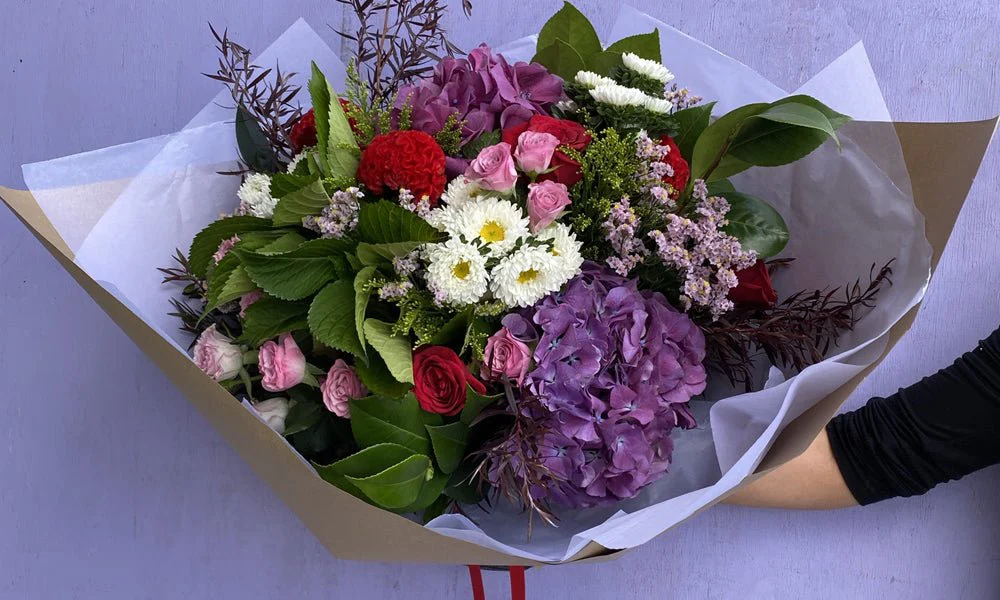
There’s something remarkably depressing about a perfectly clean, minimalist room that has zero signs of life. You’ve seen them in magazines—everything is white, the lines are sharp, and the furniture costs more than a used car. But without a bit of organic “chaos,” these spaces feel more like a museum exhibit than a home. That’s usually where flowers come in. They aren’t just a centrepiece for a fancy dinner; they’re the easiest way to change the entire energy of a room without touching a paintbrush or moving a heavy sofa.
I’m not just talking about putting a grocery store bouquet in a jar and calling it a day. While that’s better than nothing, the real transformation happens when you understand how a specific arrangement interacts with the light, the furniture, and the general “vibe” of your living space. Flowers introduce texture that synthetic materials simply can’t mimic. The soft curve of a petal against the hard edge of a marble countertop creates a visual tension that makes a room feel designed, rather than just “put together.”
The Psychology of the Living Space
It’s actually scientifically backed that having living things in your home changes how you feel. According to research on color psychology, certain hues can shift your mood almost instantly. A bunch of bright yellow sunflowers in a sun-drenched breakfast nook doesn’t just look nice; it literally signals your brain to feel more alert and optimistic. If you’ve had a particularly draining week, a low-profile arrangement of deep blues and purples in the bedroom can act as a visual sedative.
But it’s more than just the colours. It’s the scent. Most of us have become so used to the smell of “cleaner” or “scented candle” that we’ve forgotten what an actual, fresh-cut lily or rose smells like. It’s subtle, but it lingers. It makes a room feel occupied. When you walk into a house that smells faintly of eucalyptus or jasmine, you immediately relax. It’s an old-school trick, but it works every single time.
Why the Source Matters
If you’re going to use flowers as a design element, quality is the hill to die on. There is a massive difference between a mass-produced bouquet that’s been sitting in a refrigerated truck for a week and something curated by someone who actually knows their craft. This is especially true if you’re trying to elevate a space for an event or even just for your own sanity.
Experience counts for a lot in this industry. When a shop has been around for decades—like how Thanks a Bunch Florist has been operating since 2006—they’ve seen every trend come and go. They know which stems are going to wilt in three days and which ones will look even better as they start to open up over a week. For those of us living in the hustle of Melbourne, having that kind of local expertise is a lifesaver. You want someone who understands the local climate and what’s actually in season, rather than someone just filling an order from a generic template.
Room-by-Room Breakdown (Without the Listicle)
Think about your entryway. It’s the first thing you see when you kick off your shoes after a long day. If that space is cluttered with mail and keys, it feels like work. But swap that clutter for a tall, architectural arrangement—maybe some long-stemmed gladiolus or branches—and suddenly you’re entering a sanctuary. It sets a boundary between the outside world and your private life.
In the kitchen, things should be more functional. You don’t want a massive bouquet blocking your view while you’re trying to chop onions. Small, tight clusters of carnations or even potted herbs work wonders here. They add a splash of green that breaks up the monotony of appliances. And let’s be honest, we spend half our lives in the kitchen; it deserves to look a little bit “extra.”
Then there’s the dining table. This is where people usually go overboard. Unless you’re hosting a wedding, you don’t need a floral wall. You want something low enough that you can actually see the person sitting across from you. Communication is the point of a meal, after all. A few well-placed blooms in amber glass can make a simple Tuesday night pasta dinner feel like a curated experience.
Maintenance is the Key to the Look
Nothing ruins the “transformative” power of flowers faster than murky, grey water and a bunch of dead leaves. If you want the room to stay elevated, you have to do the bare minimum. Trim the stems at an angle every few days so they can actually drink. It sounds like a chore, but it’s actually a nice thirty-second ritual to ground yourself. If you’re curious about the science of keeping things alive longer, the Old Farmer’s Almanac has some surprisingly practical tips that go beyond the “aspirin in the water” myths.
And don’t be afraid to be opinionated with your choices. If you hate roses, don’t buy roses just because they’re “classic.” If you love the weird, structural look of Australian natives, lean into that. Your home is an extension of your personality. A reputable shop will be happy to customize something that fits your specific aesthetic rather than pushing a one-size-fits-all bouquet.
At the end of the day, flowers are a temporary luxury, and that’s part of their charm. They remind us that the seasons are changing and that even a stagnant room can be brought back to life with a little bit of color and a lot of fresh water. Whether you’re prepping for a big Melbourne wedding or just want your home office to feel less like a cubicle, the right arrangement is the fastest shortcut to a better-looking space.