
Most people have washed their hair thousands of times. Thousands. And still – somehow – nobody really stops to question whether they’re doing it right. It’s one of those things that feels too basic to get wrong, which is probably exactly why so many people have been getting it slightly wrong for years. Bad hair days, chronic dryness, a scalp that’s either flaking or so oily it needs washing every 24 hours – a lot of that traces back to the shower. Specifically, to what’s happening in the ten minutes you’re not paying attention.
Start Before You Even Open the Bottle
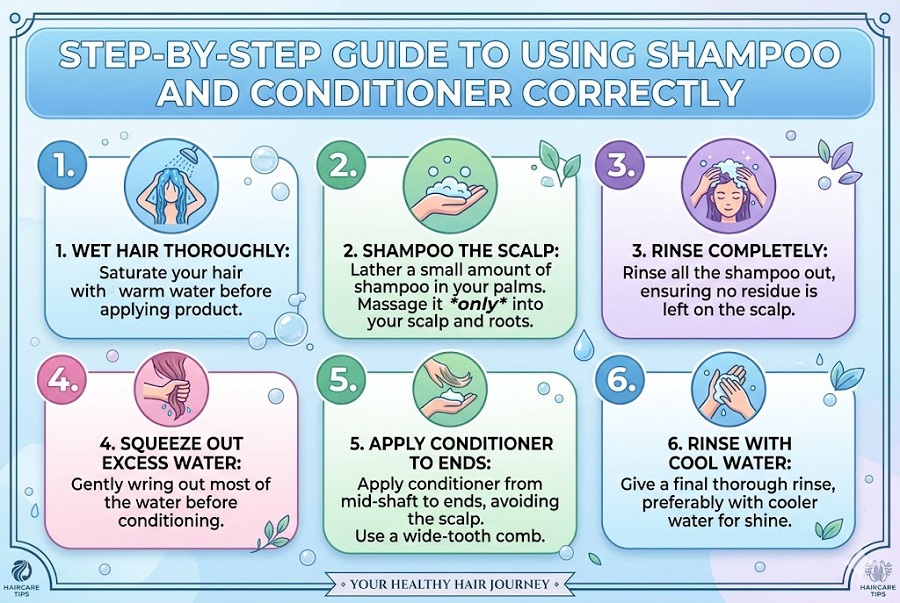
Water temperature. This is where it actually begins and almost nobody thinks about it. Hot water feels good – that part’s not up for debate – but it also opens the hair cuticle aggressively and strips the scalp of its natural oil faster than anything else in your routine. You don’t need cold water. Warm is fine. Just not the kind of hot that fogs up the mirror within thirty seconds of turning the tap on.
Detangle before you get in if your hair is prone to knotting. Wet hair is fragile – the bonds inside the shaft weaken when saturated and that makes it significantly easier to snap strands trying to work through tangles after the fact. Two minutes with a wide-tooth comb before stepping in saves more breakage than most people realize.
How to Actually Shampoo – Not Just Lather and Rinse
Wet the hair thoroughly first. Completely saturated. Shampoo applied to half-wet hair distributes unevenly and you end up using twice as much product to compensate.
Amount matters more than people think. A quarter-sized amount for short to medium hair. Maybe slightly more for long or thick hair – but the instinct to keep adding more until it lathers the way you want it to is usually just a sign the hair wasn’t wet enough to begin with. More shampoo doesn’t mean cleaner.
Apply it to the scalp, not the lengths. This is the one that surprises people. The scalp is where oil and buildup accumulate. The lengths don’t need direct shampooing – they get cleaned by the product running through them during rinsing. Use your fingertips, not your nails, and work in small circular motions rather than scrubbing back and forth which tangles the hair and irritates the scalp.
Rinse longer than you think you need to. Shampoo residue left on the scalp is one of the most common causes of itchiness and buildup that people wrongly attribute to product sensitivity.
Conditioner Is a Different Job Entirely
This is where the routine changes direction completely. Shampoo is about removing – conditioner is about restoring. And they belong in different places on your head.
Scalp doesn’t need conditioner. It’s already producing sebum – your hair’s natural moisture source. Conditioner applied to the roots sits on the follicles, weighs everything flat, and creates a greasy buildup that makes freshly washed hair look dirty by afternoon. Start from the ears. Work downward through the mid-lengths and ends.
Leave it. Actually leave it. Two to three minutes minimum – not the thirty seconds most people give it while they finish the rest of their shower. The conditioning agents in a good hair shampoo and conditioner need time to penetrate the cuticle. Rinsing immediately means the product never did anything except briefly touch the surface of your hair on its way out.
Cool rinse at the end. This one step – fifteen seconds of cooler water before turning the shower off – closes the cuticle back down. Closed cuticle means moisture stays in, frizz stays manageable, and if you have color it holds longer. The water doesn’t need to be cold enough to be miserable. Just noticeably cooler than what you’ve been washing in.
After the Shower – What You Do Next Matters
Towel drying the wrong way undoes a lot of what the routine just did. Rubbing hair with a towel creates friction against an already-softened cuticle and causes breakage and frizz that gets blamed on everything except the towel. Squeeze and blot. That’s it. Press sections between the towel rather than scrubbing the whole head.
If you use heat tools – blow dryer, straightener, anything – a heat protectant goes on damp hair before any of that starts. Not negotiable if you’re using shampoo and conditioner formulas designed to restore or protect. Skipping the protectant while using a 400-degree tool is like moisturizing and then sitting in direct sun for an hour.
Conclusion
None of this is complicated. That’s the thing. The correct way to use shampoo and conditioner is not some elaborate ten-step process – it’s just doing the steps you’re already doing with slightly more intention. Warm water, not scalding. Shampoo on the scalp. Conditioner on the ends. Let it sit. Finish cool. Blot dry. That’s the whole thing. Do it consistently and the hair responds – usually faster than expected, and in ways that make the years of bad hair days feel genuinely unnecessary in retrospect.