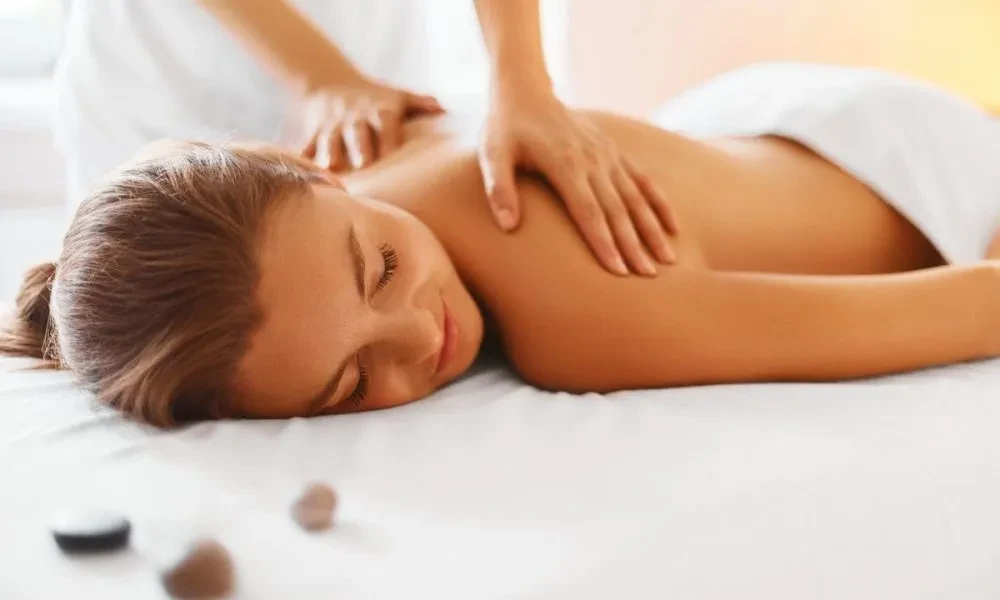
The puffy face and a fatigued complexion may indicate a slow lymphatic. This system can be stimulated by the use of a gentle massage; this massage assists in reducing the amount of fluid and making the skin clearer. This is an informative guide on how the massage of the face to the lymphatic drainage can work naturally to appear healthier and more radiant.
The natural physical process behind why this gentle technique works
Understanding initial lymphatic capillaries
Initial lymphatic capillaries are fine vessels with thin walls which occur immediately below the skin of the face. These bodies are naturally formed to accumulate extra fluid of surrounding tissue before it is transferred into the lymphatic system. Knowledge of this initial point can be used to come to terms with why the soft surface pressure could affect anything whatsoever.
Why gentle pressure works better than force
Initial lymphatic capillaries react to light, stretch pressure and not forceful deep manipulation. Excessive squeezing may squeeze these fragile structures rather than stimulating the flow of fluids through them. This sensitivity can assist in determining why the lymphatic massage is so distinctly different from the deep tissue procedures. Think the following reasons why gentle pressure is good:
- Thin vessel walls: These are delicate structures that are better to stretch in light than deep compression.
- Skin-anchored filaments: These are tiny filaments that anchor vessels in the skin, which open a little as the skin is gently stretched.
- Reduced compression risk: Firm pressure risks may be temporary flattening vessels instead of maintaining their activity.
- Natural opening response: Light stretching is necessary to enable such one-way openings to work.
The role of one-way valves
Lymphatic vessels have tiny, one directional valve that ensure that fluid flows in one, uniform direction. Such valves do not allow backwards movement and that is why the direction of the strokes is so important with facial massage. Such knowledge of this valve system allows explanations of why directional technique guidance has a biological rationale. These are the valve mechanics to take into consideration:
- One-directional flow control: Valves enable the flow to be forward only but not backward.
- Sequential vessel segments: A series of valved collections of fluid are directed to larger collecting vessels.
- Direction-dependent support: Massage direction must be consistent with the direction of the valves to be really supportive.
How muscle and skin movement assist drainage
The lymphatic system does not have a central pump similar to the heart and counts on movement around. The system has a natural involvement of muscle contraction, skin stretching, and breathing all to support fluid movement in the system. Knowledge of this passive process will aid in explaining why massage therapy can effectively complement natural activity. Take into consideration the following natural movement-aided processes:
- Muscle contraction pressure: Within a proximity of the muscle movement, compression naturally occurs and aids the neighboring lymphatic vessels.
- Skin stretch stimulation: These motions mimic natural motions that aid vessel operation, and are achieved by stretching the skin during massage.
- Breathing-related assistance: Deep breathing provides some help to fluid movement with variation in internal pressure.
Conclusion
The effectiveness of lymphatic drainage face massage is that it helps natural movements and valves of the delicate vessels which are already present in the skin, it is gentler. Learning of this natural action helps to explain why light, constant technique is more important than power. It is still recommended that a healthcare expert should consult any person with preexisting lymphatic or vascular conditions.